

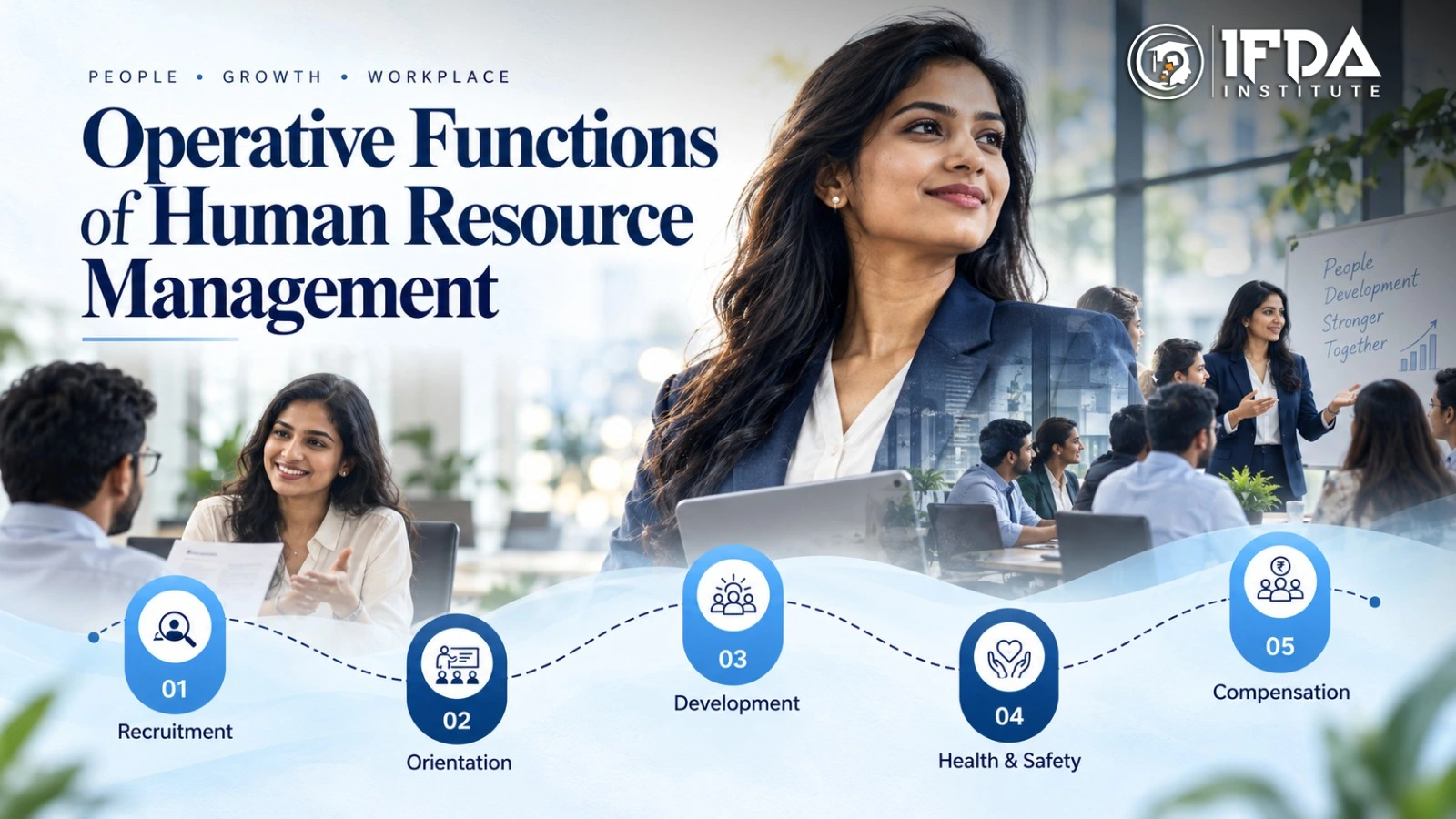
Every organisation relies on its employees to achieve its objectives. Having competent, driven and responsible staff members is fundamental to the success of any business. However, managing employees goes beyond hiring and paying. Human Resource Management (HRM) is used to help develop employees.
Operative Functions of Human Resource Management
Human Resource Management (HRM) is the process of managing your organisation’s staff in order to meet business objectives whilst also promoting employees’ growth and happiness. Activities include workforce planning, recruiting, training, performance appraisals, managing pay and building good relationships.
In simple terms, HRM means making sure you are hiring the correct individuals for the correct roles and providing them with the support they need.
HRM is not just an administrative role; it can also help with planning, engaging, developing and ensuring long-term success.
Definition of Human Resource Management by Edwin B. Flippo
A renowned management theorist, Edwin B. Flippo, defined personnel management as
"the planning, organising, directing, and controlling of procurement, development, compensation, integration, maintenance, and separation of human resources to achieve individual, organisational, and societal objectives."
This shows that there are two key aspects of human resource management. To manage the activities of HR in an organised manner and to ensure that employees and organisations benefit.
What are operative functions?
Operative functions are the activities that are used to recruit, develop, pay, support and keep employees. They are related to the daily activities of managing your human resources.
They differ from the managerial functions, as they are the actions taken to implement human resources policies.
Examples of operational functions include hiring, training, managing pay, dealing with issues in the workplace and exit interviews.
Key Operational Functions
The key operational functions are usually split into 6 categories. These are procurement, development, compensation, integration, maintenance and separation.
1. Procurement
This involves finding and hiring the right employees for your organisation. The main reason for this activity is to ensure that your organisation has enough employees with the correct qualifications, experience and skills.
Activities include:
- Workforce planning and job analysis.
- Recruiting.
- Screening.
- Selecting.
- Placement.
For example, if your organisation needs a Digital Marketing Executive, the HR department will determine what the role requires, advertise for the role, assess and select the best candidate.
2. Development
Human Resource Development involves increasing employees’ knowledge, professional skills and performance. Although it is important to hire qualified employees, you also need to help them adapt to new roles.
Training, appraisals, career planning, mentoring and leadership development are all included in this activity.
For example, your organisation might provide training sessions to improve employees’ communication and technical skills.
3. Compensation
Compensation includes ensuring your employees are paid fairly and appropriately for their contribution.
Activities include:
- Managing pay.
- Wages.
- Bonuses.
- Performance incentives.
- Allowances.
- Benefits.
A good compensation strategy will consider the role, performance, market and employment law. By fairly paying your employees, you can increase their satisfaction, retention and performance.
4. Integration
Integration involves building positive relationships between employees and management. This ensures that organisational goals are met whilst also considering the expectations, interests and professional needs of employees.
Key activities include:
- Communicating with employees.
- Dealing with grievances.
- Resolving conflict.
- Employee involvement.
- Building positive relationships.
For example, if employees have concerns about their workload or policies, the HR department can help to facilitate discussions to find reasonable solutions.
5. Maintenance
Human Resource Maintenance involves creating an environment that encourages employees to stay healthy, safe and happy with their organisation.
Activities include:
- Health and safety.
- Employee welfare.
- Wellbeing.
- Social security.
- Work/life balance.
- Retention.
For example, providing a safe working environment, sensible leave and medical benefits will help to keep employees happy.
6. Separation
This is the final stage of the employee life cycle. It involves managing employees leaving the organisation, whether this be due to resignation, retirement, termination, redundancy or other reasons.
HR will often deal with exit interviews, final pay and managing documents. They will ensure that everything is done in line with laws and policies.
Having a professional exit process will help to keep relationships positive and provide valuable feedback.
Objectives of Operational Functions
Operational functions should be used to manage your employees effectively to help your organisation perform and develop individuals.
The main objectives are to:
- Recruit qualified employees.
- Increase employees’ knowledge, skills and performance.
- Ensure they are paid fairly and have appropriate benefits.
- Build positive relationships between employees and management.
- Keep employees safe, happy and well.
- Encourage employee retention and development.
- Ensure staff are managed properly when leaving.
This will help your organisation to build a competent, driven and stable workforce.
Managerial vs Operational Functions
Whilst both are important, they have different purposes.
| Basis | Managerial Functions | Operative Functions |
| Meaning | Activities related to managing HR operations | Practical activities related to employees |
| Main focus | Planning and supervising | Implementing employee-related activities |
| Key functions | Planning, organizing, directing, controlling | Procurement, development, compensation, integration, maintenance, separation |
| Purpose | Ensure effective management | Manage the employee lifecycle |
| Example | Planning workforce requirements | Recruiting and onboarding employees |
Importance of Operational Functions
Operational functions are very important. They help to link your organisations staffing requirements with the employees’ experiences.
Improved recruitment process – Using a structured process will ensure you find candidates with the right qualifications and skills.
Improved development – Regular training will help improve employees’ performance and prepare them for future roles.
Increased employee satisfaction – Ensuring they are paid fairly, have supportive policies and positive relationships will increase satisfaction.
Improved retention – If you invest in your employees’ wellbeing, development and communication, you may see less employee turnover.
Improved efficiency – Having clear processes in place will help reduce confusion and ensure things run smoothly.
Role of the HR Manager in Operative Functions
The operative functions of human resource management help organisations understand what their employees need while making sure the business has the right people and skills to achieve its goals. These functions make everyday HR activities easier to manage and contribute to a more supportive and productive workplace.
Better Recruitment: A clear and well-planned hiring process helps companies find people who have the skills, experience, and qualifications needed for a particular job.
Employee Training: Learning doesn't stop once someone gets hired. Regular training gives employees the opportunity to improve their skills, feel more confident in their work, and take on new responsibilities in the future.
Greater Job Satisfaction: Employees are more likely to feel happy and valued at work when they receive fair salaries, are treated respectfully, and have a positive relationship with their managers and colleagues.
Better Employee Retention: People are more likely to stay with a company when they feel supported and see opportunities to grow. Providing training, recognising their efforts, and taking their concerns seriously can encourage them to stay longer.
Smoother Daily Operations: When HR processes are simple and clearly organised, employees know what is expected of them. This helps avoid unnecessary confusion, improves teamwork, and makes everyday work run more smoothly.
Role of Technology in HR Manager
Technology has helped many HR activities. Using a Human Resource Management System (HRMS) and Human Resource Information System (HRIS) can help streamline processes and store employee data.
Using software such as Zoho People, SAP SuccessFactors and Workday can help with recruitment, employee data, leave management, performance tracking and other activities.
This will help reduce the amount of manual admin, ensure accurate records and allow the HR to focus on developing employees and building positive relationships.
Conclusion
Operational functions are the starting point for managing your employees. They include recruiting the right candidates, developing their skills, ensuring they are paid fairly, building good relationships, encouraging employee wellbeing and managing separation. Overall, they help ensure organisational stability and development.
By managing operational functions effectively, you can create a supportive environment, improve performance and create a workforce who have the capabilities to achieve long-term business objectives.
Ready to Take the Next Step in Your Career?
Explore IFDA Institute courses and build the skills you need for your creative and professional career.